Resetly
Ambient Mental Health SaaS Solution for the Overloaded Workplace | Apr 2025 – Aug 2025
What
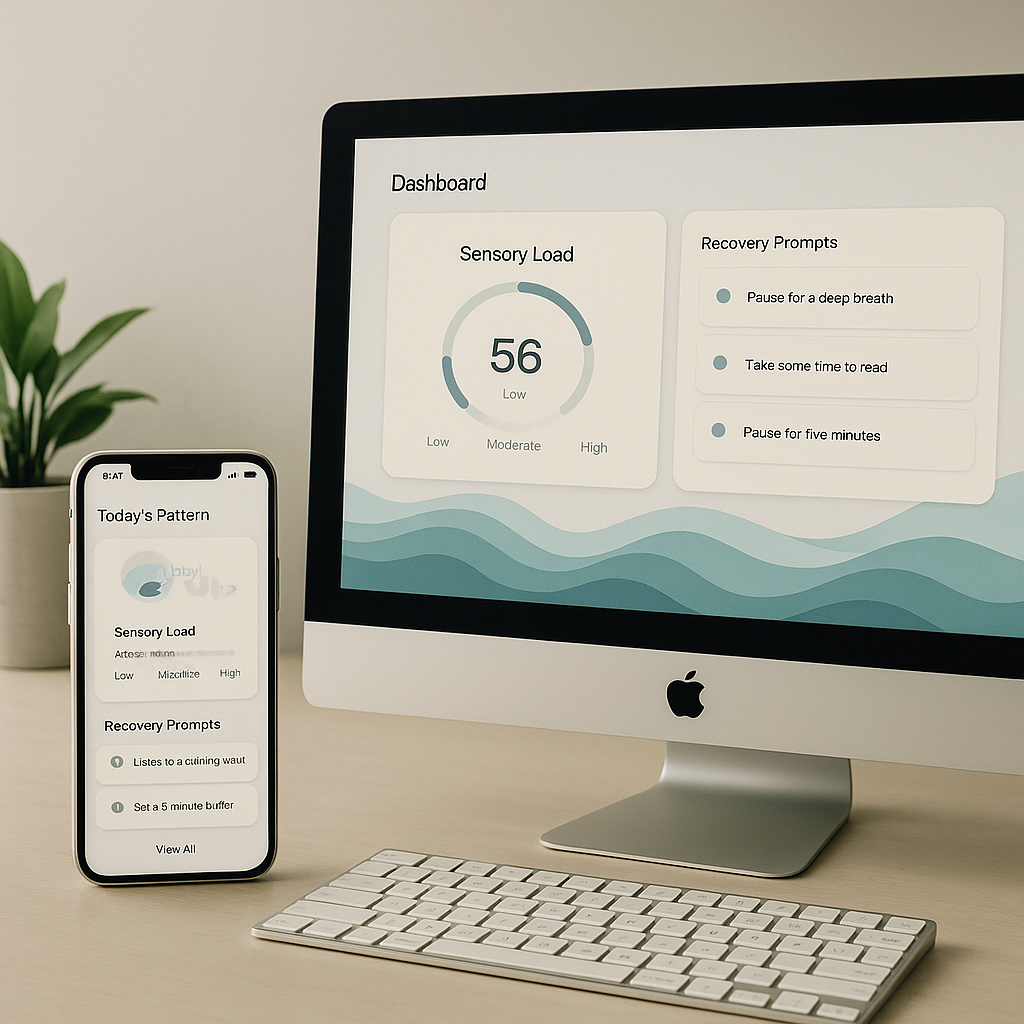
SaaS for invisible, 90-second recovery in high-input work environments
Why
93.6% of workers experience repetitive stress; 80.6% use no digital tools
How
AI + contextual triggers → micro-interventions
My Role & Method
Solo UX Researcher & Strategist
• n=31 survey
• Systems map
Observing the Breakpoint
Why do they keep working, even when their vision blurs?
Lucy’s Story
At 2:37 PM, she stares blankly at her screen. Back-to-back meetings. Notifications. Lights too bright. She’s not burnt out yet—but she’s well on her way. She doesn't want therapy. She wants 90 seconds to breathe, invisibly.

93.6%
Repetitive Stress
Professionals experiencing repetitive stress
80.6%
No Digital Tools
Use no stress management tools
67.7%
Sensory Overload
Report high overstimulation from noise, light, meetings
The issue is not individual burnout, but a systemic trust and accessibility failure in the modern workplace, demanding a Privacy-First, Ambient solution. To define the core user, I segmented the n=31 respondents.
Who Feels This Most
20s–30s Women (61.3%)
Digital natives facing high input demands
Junior-Mid Level (93.5%)
Performance anxiety, low control
IT / Art / Sales (Top 3)
Creative roles with deadline pressure
Large Companies (66.8%)
Open offices, noise, constant meetings
Contextual Diagnosis: Grounded Behavioral Taxonomy
Passive, avoidant behaviors feel safer.
Visibility = vulnerability.
“People don’t fail to manage stress. They manage it alone, in silence, with whatever’s at hand.”
In order to abstract stable behavioral patterns from subjective emotional language, I employed a Grounded Theory approach on qualitative response data and behavioral logs. This process resulted in three Contextual Behavioral Archetypes that formed the core logic for the system.
1.
Overloaded but Unseen
Observed Action: Dim screen, mute Slack, close eyes briefly, silent stretching.
Unmet Need: Early, non-verbal detection and invisible intervention.
System Logic: Validates need for Passive Input (Ambient Sensing) to lower barrier during acute stress.
2.
Self-Regulating Avoider
Observed Action: Private coping rituals—snacks, scrolling, quick escape.
Unmet Need: Support without exposure; tools must feel like work not wellness.
System Logic: Design for Routine—convert sporadic actions into repeatable Micro-Intervention Routine (under 2 min).
3.
Sensory-Triggered Professional
Observed Action: High-functioning until one final, small trigger causes collapse.
Unmet Need: Pre-emptive, context-triggered micro-interventions. Permission to pause.
System Logic: Design for Environmental Control—provide Sensory Hygiene tools alongside emotional support.